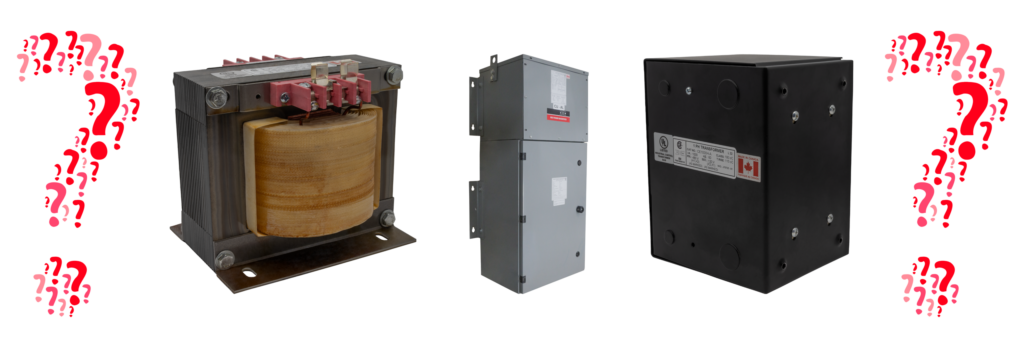
Choosing the right transformer isn’t just a routine task; it’s a pivotal decision, akin to picking the ideal location or investing in essential machinery. Consider it the heartbeat of your electrical system. A healthy, well-suited transformer keeps everything humming, prevents costly surprises, and lets you rest easy. A weak or inadequate one? Buckle up for headaches, unexpected shutdowns, and potential dangers.
A transformer that’s properly sized and built to last ensures your electrical systems run safely and efficiently. This translates to less downtime, longer equipment life, and savings on operating costs down the road. On the other hand, skimping with an undersized or cheap transformer can lead to overheating, unstable voltage, higher repair bills, and even safety risks. Think of it as trying to power your house with a generator meant for a campsite.
Whether you are outfitting a brand-new facility, scaling up current operations, or finally swapping out that ancient, sputtering transformer tucked away in the back, understand that your transformer choice impacts efficiency, performance, and safety for years to come. So, how do you choose a transformer? Let’s get started.
Transformer Capacity and Future Growth: Planning Ahead
Capacity should be the cornerstone of any transformer selection process. Misjudge this, and you’re setting yourself up for trouble. Capacity, measured in kilovolt-amperes (kVA), must satisfy your facility’s current electrical needs and have some wiggle room for when you grow. Think of it like packing for a trip; you always bring a little extra space, right?
Start by carefully evaluating your current load profile, the sum total of electricity your facility demands from the grid when things are busiest. Consider everything: lighting, HVAC, that energy-guzzling CNC machine, and even the coffee machine in the breakroom. Reviewing this is similar to getting new glasses; you want to be able to see everything!
Choosing a transformer that typically operates at around 80% of its rated capacity is a smart move. This gives you a safety net, helps prevent overheating, eases stress on the components, and prolongs its lifespan. Driving the transformer at full capacity is like flooring your car all the time; you wear it down. Overloading it has some considerable impact: premature breakdown, emergency replacements, and halted production lines, which hurt deadlines, revenue, and reputations. A transformer operating over 90% will likely fail in 5 years.
Got expansion on your radar? Definitely plan for extra headroom. Paying a bit extra now beats replacing the transformer later. A transformer sized just for today could need replacing fast when you add equipment. Upping the capacity on the front end can save money compared to buying a second transformer down the road or dealing with constant overloads. What’s on the horizon, a new production line? More hefty equipment? Bake it all in. Another thing to consider is doing a phased expansion. Start with the smaller capacity now, and add transformers after the expansion.
Voltage Considerations: Primary and Secondary – Match Game
Precise voltage matching is essential for both safety and efficiency. Mismatched voltages can fry equipment quicker than you can say “insurance claim.” You need to nail down the primary voltage (from the utility) and the secondary voltage (what your equipment needs).
Here in Canada, we frequently see primary voltages like 4.16kV, 13.8kV, and 25kV. But don’t assume. Contact your utility and confirm your exact voltage. Keep this information close like a password, and double-check its accuracy. Secondary voltages often land between 208V and 600V, based on what kind of equipment you’re running. Modern industrial plants sometimes use cascaded systems. Cascading allows more granular voltage delivery to different zones.
Also, double-check the system frequency (50Hz vs. 60Hz). North America tends to use 60Hz, while other regions prefer 50Hz. An incorrect frequency can cause equipment damage, and of course, void those warranties. Imagine trying to fit a square peg in a round hole; it’s just not going to work. If the frequency parameter doesn’t match, it can affect core losses and impedance of the unit, and it will age faster.
Transformer Type and Construction: Finding the Right Transformer
Different transformers are suitable for different jobs. Using the wrong tool never works well. So here is a rundown of the main options:
Single-Phase Transformers – Great for light commercial or residential applications where you don’t need three-phase power. Consider small shops or local offices. These are smaller, less expensive, and simpler to install and maintain.
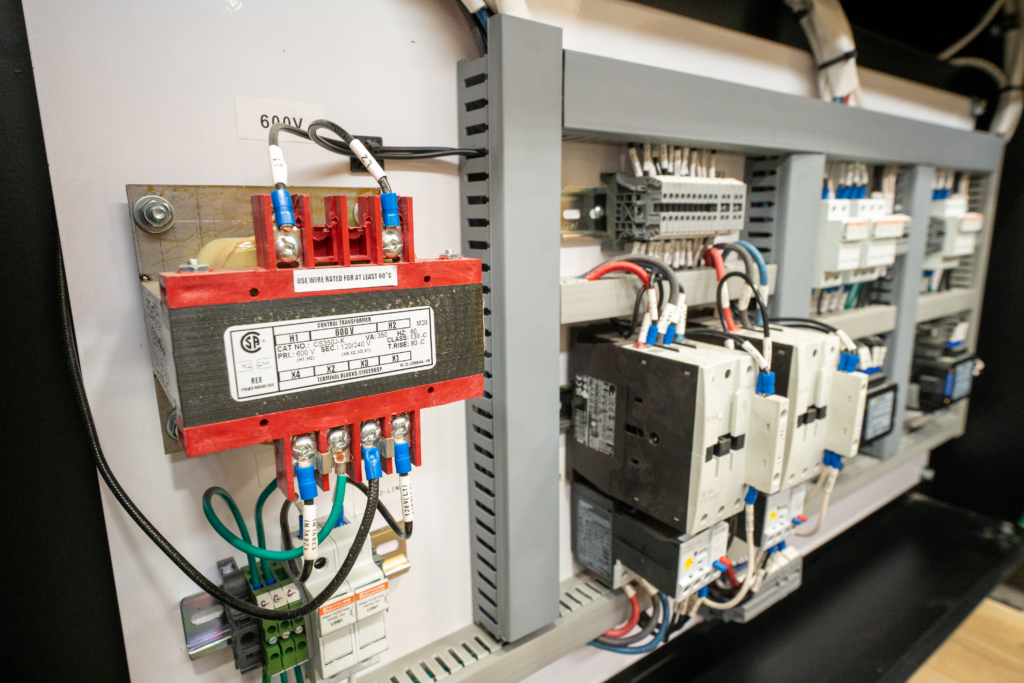
Three-Phase Transformers – Best for industrial and commercial facilities with major three-phase electrical loads, offer higher efficiency and a better price per kVA. This is the unit that does all the heavy lifting for larger operations. This class of transformer handles a much higher demand load than the single-phase version.
Dry-Type Transformers – These use air for cooling. For the most part, these are safer for indoor use, require less upkeep, and make less noise. Picture this as the “cleaner” choice. Additionally, these units utilize high-temperature insulation systems. And overall, dry-type units can withstand higher operating conditions and reduced fire hazards.
Oil-Filled Transformers – Top-notch cooling and higher efficiency make these perfect for outdoor or heavy-duty uses. However, you will need containment measures for leaks, and they require a bit of upkeep. These are known as “heavy lifters,” since the oil effectively distributes heat, enabling large loads.
Choosing between dry-type and oil-filled comes down to cooling demands and maintenance requirements. Are you worried about upkeep or maximizing efficiency? Also, check out cast resin units. They reduce the risk of environmental damage and fires!
Calculating kVA Requirements: Crunching the Numbers
Figuring out the right kVA is critical (we mentioned it twice, to make sure it sticks). The formula changes when going from single-phase to three-phase setups:
Single-Phase kVA Formula:
𝑘VA = (V × I) / 1000
Where, V = Volts, I = Current in Amps
Three-Phase kVA Formula:
𝑘VA = (V × I × 1.732) / 1000
V = Volts and I = Current. (1.732 is the square root of 3).
Here’s an example. For example, let’s say a three-phase load has a current draw of 100A and the voltage is at 480V. Calculation:
kVA = (480 × 100 × 1.732) / 1000 ≈ 83 kVA
Always go beyond the next standard kVA to ensure you’ve got ample capacity. In this case, you’d likely select 100 kVA. If you have to choose between too little and too much, pick more. A power quality audit, analyzing and recording actual loads, ensures you are getting correct values.
Environmental and Load Conditions: Understanding the Context It is In
When selecting a transformer, considering environmental factors is important. Think of picking clothing for the day. You wouldn’t pick a light jacket for winter.
Ambient Temperature: Transformers are typically rated at 30°C. If your facility runs hotter than that, you may have to go with a larger transformer or use an air-cooling setup. A 10°C bump above that cuts the unit’s life in half!.
Installation Location: Outdoor units must have enclosures to protect them from the elements. Indoor setups need to minimize noise, mainly when offices sit in proximity. Check noise levels and ensure they don’t bother workers.
Load Type: Lighting, manufacturing equipment, and variable frequency drives (VFDs) all require transformers that do different things. If harmonic distortions are high, use a K-rated transformer to prevent excess heat. Linear loads have a more stable, sinusoidal draw, while non-linear loads cause harmonic issues, causing overheating and decreasing efficiency.
Specialized transformers exist for harsh environments. In essence, there’s a transformer to fix any challenge. These units require robust sealing and advanced coatings.
Transformer Quality and Reliability Details: Maximizing Longevity
Not all transformers provide the performance. Saving on the transformer leads to more issues down the road. Like using cheap tires on a car, they wear fast and aren’t reliable. Things to look for:
Core Material: Steel laminations reduce loss and improve how well the unit works. Better core material leads to cooler operation, as well as better reliability. In addition, amorphous steel core units take further gains in unit efficiency.
Conductor Material: Copper windings provide superior conductivity and efficiency over aluminum. By using copper, less heat is generated for a longer life. Aluminum, while more affordable, increases loss value.
Insulation Class: Enhanced insulation extends a transformer’s operating life. Insulation classes are rated as A, B, F, and H, with H offering better aging characteristics.
Testing: Verify stringent tests for efficiency, withstanding impulse, and resistance. Any manufacturer stands by these values with comprehensive testing data. These measurements adhere to IEEE/IEC measurements.
Yes, spending more money gets quality. It pays for itself due to reducing energy cost, minimizing maintenance, and preventing unplanned outages, equating to a lower total cost of ownership. Thermographic surveys ensure that you can detect failures ahead of time.
Lead Times and Availability: Being on Time
Lead times can significantly affect when projects are completed. Not having a transformer creates a huge issue in business operations! Because of some recent worldwide issues with getting products and supplies, it’s important to manage lead times for project completion.
Custom units may take months. Fortunately, some suppliers carry a supply of the units and can ship quickly to minimize downtime. If a unit fails, a business needs to have a plan on deck to handle a failure. Keeping an on-site unit minimizes that risk.
Customization and Retrofits: Maximizing Compatibility
When a transformer breaks, it’s uncommon to have it line up for the existing installation. So, flexibility is needed. Units with tap settings and changeable mounting configurations allow you to adapt.
Custom work can help retrofit a unit to install easily. As a result, install times decrease, and costly rework can be avoided. Working with engineering partners assists with tricky installs. Also, verify customization during supplier evaluation. Modular designs lower integration expenses.
Sourcing and Vendor Support: Selecting The Right Partner
A supplier focuses on assisting you through the entire process. Select a competent and experienced team. Having a track record leads to long-term service availability.
Find vendors that:
Experience: Experienced people solve problems. Ask for references from other clients to make sure that they are competent at what they do.
Customer service: Customer service can resolve any issue and find suppliers that are easy to deal with. Ensure 24/7 support with communication channels.
Tech Support: Helps with installation and troubleshooting, and they may be certified engineers.
Working with a supplier ensures you have the right transformer along with timely project completion. Consider monitoring, maintenance, and overall optimization of performance.
Summary Checklist
Here are key steps in selecting transformers:
- Determine future and current loading.
- Look at voltages and frequencies carefully.
- Select the right type for the environment.
- Verify tests and quality.
- Understand realistic lead/availability.
- Decide that custom-fitting is a priority.
- Partner with a strong vendor.
Selecting transforms is about determining how to meet demands and finding how to sustain business goals. By investing safely, businesses can have enhanced quality. Make sure the plan ensures proactive maintenance is optimized.