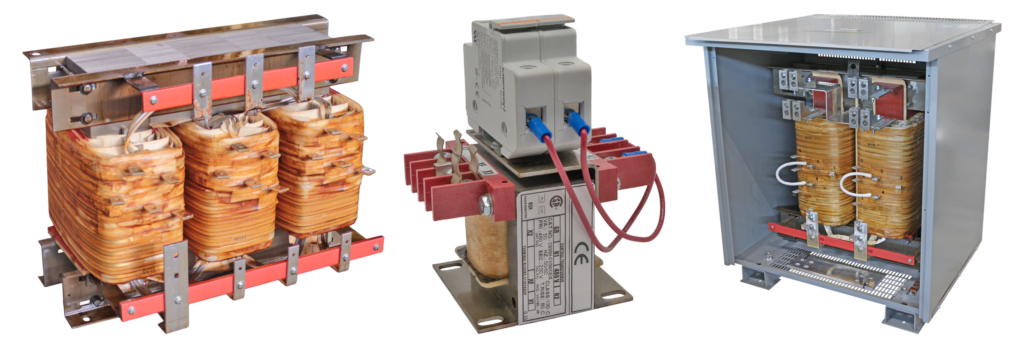
Transformers are essential components in electrical systems, allowing the efficient transmission and distribution of electrical energy. A transformer’s core function is to alter the voltage of electricity, either stepping it up or stepping it down, depending on the application. However, what are the primary transformer types? The answer is that transformers come in various types, each designed for specific tasks in power generation, transmission, and distribution.
Let’s uncover what are the main types of transformers and how they work.
Top Classification of Transformers by Function
1. Step-Up Transformer
A step-up transformer is designed to increase the voltage level of electricity. This is crucial for transmitting power over long distances, as higher voltage allows electricity to travel efficiently with minimal loss. These transformers are typically used in power generation stations to boost the voltage before it enters the transmission lines.
2. Step-Down Transformer
On the other hand, a step-down transformer decreases the voltage of electrical power to safer, usable levels. Once electricity reaches its destination, it must be reduced to levels that are safe for commercial, industrial, and residential use. Step-down transformers are commonly found in substations and at the end of power transmission lines.
3. Isolation Transformer
Galvanic isolation between its primary and secondary circuits is provided by an isolation transformer. This means there is no direct electrical connection between the two circuits, enhancing safety and protecting sensitive equipment. Medical equipment, lab environments, and locations needing precise electrical performance frequently use isolation transformers.
4. Power Transformers
Power transformers are used in large-scale electrical systems, playing a vital role in power generation, transmission, and distribution. These transformers operate under high voltage and are crucial for ensuring electricity reaches users effectively and safely.
5. Generator Transformers
Generator transformers are step-up transformers used in power stations to increase the voltage from the generator before it is transmitted over long distances. These transformers are specifically designed to handle the high output of power plants, ensuring the electricity is in the proper voltage range for transmission.
6. Transmission Transformers
Transmission transformers are designed to handle the high-voltage transfer of electricity over long distances. These transformers are used in substations to step down the voltage for distribution. They are designed to withstand high pressure and high electrical loads.
7. Distribution Transformers
Distribution transformers are used to deliver the final voltage to consumers. These transformers step down the high-voltage electricity from transmission lines to the lower, usable voltages found in homes and businesses. They are critical for ensuring electricity is safe and effective for everyday use.
Main Classification by Cooling Method
Transformers can also be classified based on their cooling method. For high-power transformers to remain efficient and avoid overheating, cooling is crucial.
1. Oil-Immersed Transformers
Oil-immersed transformers are cooled using oil, which acts as a heat dissipation medium. The oil absorbs the heat generated by the transformer’s core and windings, helping to prevent overheating. These transformers are commonly used in outdoor applications due to their ability to handle high power levels and provide efficient cooling.
2. Dry-Type Transformers
Dry-type transformers, on the other hand, are not immersed in oil and instead use air or other gases for cooling. These are often used in indoor settings or in locations where oil-immersed transformers might pose a risk. They are safer for sensitive environments and are commonly used in commercial buildings, hospitals, and high-traffic areas.

The Special Purpose Transformers
While the primary function of a transformer is to adjust voltage levels, there are special-purpose transformers designed for specific applications that go beyond the basic step-up or step-down functions.
1. Instrument Transformers
Instrument transformers, such as current transformers (CT) and potential transformers (PT), are used for metering and protection in electrical systems. They measure current and voltage levels and provide accurate readings for monitoring and control.
2. Autotransformers
Autotransformers have a single winding that acts as both the primary and secondary winding. These transformers are more compact and efficient than their two-winding counterparts, but they offer less electrical isolation. They are often used in applications where size and efficiency are crucial.
3. K-Factor Rated Transformers
K-factor-rated transformers are designed to handle non-linear loads that produce harmonic distortion. These transformers are commonly used in industrial applications with variable-speed drives or other equipment that may generate harmonic currents.
4. Harmonic Mitigating Transformers
Harmonic mitigating transformers are used to reduce the impact of harmonic distortion caused by non-linear loads. These transformers help improve power quality and extend the life of electrical equipment by mitigating harmonic currents that can cause overheating and inefficiencies.
5. General Purpose Isolation Transformers
General-purpose isolation transformers are used to provide isolation in a wide range of applications, including medical devices, laboratory equipment, and sensitive machinery, ensuring the protection of both equipment and users.
Key Takeaways
- Transformers are essential in electrical systems, adjusting voltage levels for power generation, transmission, and distribution.
- There are different types of transformers based on their function, including step-up, step-down, and isolation transformers.
- Power transformers are used in large-scale applications, such as power stations, transmission lines, and distribution networks.
- Transformers are generally classified by cooling methods (oil-immersed and dry-type).
- Special-purpose transformers, such as autotransformers and instrument transformers, serve unique applications in industrial and commercial sectors.
- Transformers are critical in integrating renewable energy sources, maintaining the efficiency of power grids, and ensuring the safety of electrical systems in residential, commercial, and industrial settings.
- Understanding the different types of transformers and their applications helps ensure that electrical systems operate efficiently, safely, and reliably, regardless of the industry or setting.